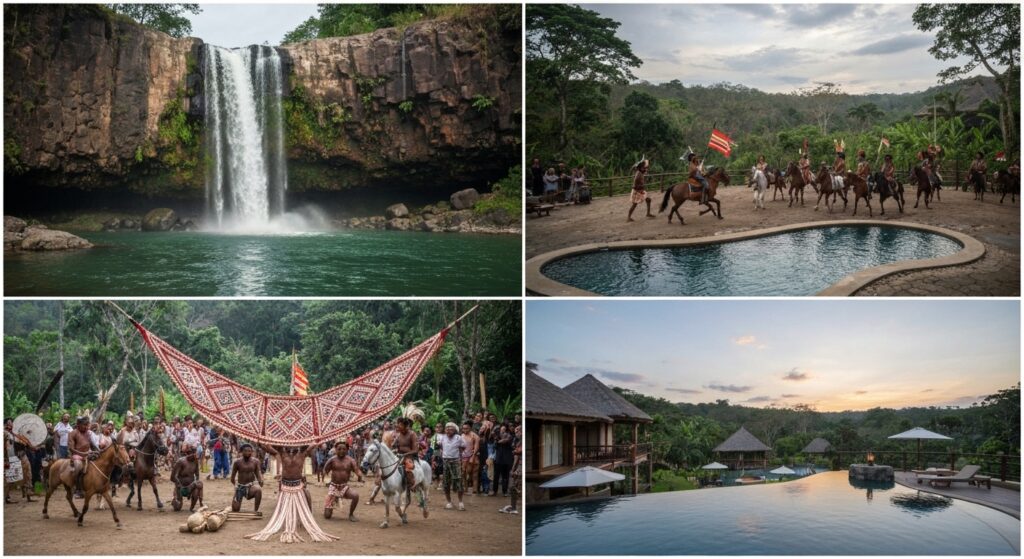
Pasola 4D/3N Tour Package — A four-day, three-night immersive journey into Sumba’s most sacred cultural event, the Pasola Festival. This package combines front-row access to the ancient mounted spear-throwing ceremony with visits to traditional villages, waterfalls, and beaches, guided by local experts who can explain every ritual’s significance.
Experience the Pasola Festival Like an Insider
The Pasola Festival is one of the world’s most spectacular cultural events — a ritual mounted spear-throwing battle that has been practiced on Sumba Island for centuries. Our 4D/3N package is designed specifically around the Pasola calendar, ensuring you witness the most dramatic moments of this ancient ceremony while also exploring Sumba’s stunning landscapes. Unlike other tours, our package includes exclusive access to pre-ceremony rituals, local guide interpretation of every sacred element, and strategic positioning for the best views and photography angles. This is not just watching a festival — it’s understanding a living ancient tradition from the inside.
Day-by-Day Itinerary
Day 1: Arrival & Cultural Preparation
Arrive at Tambolaka Airport with private transfer to your luxury resort. Afternoon orientation with your cultural guide who explains the spiritual significance of Pasola — the connection between the Nyale sea worm ceremony and the mounted battles. Visit a nearby traditional village to witness pre-Pasola preparations, including horse blessing ceremonies and warrior rituals. Welcome dinner with traditional music performance and introduction to the Marapu belief system that underlies every aspect of Pasola.
Day 2: Nyale Ceremony & Beach Dawn
Pre-dawn departure to the ceremonial beach for the Nyale ceremony — the gathering of sea worms that determines when Pasola battles will begin. This mystical event features Rato priests reading the sea worms by torchlight as hundreds of villagers gather on the beach. After the ceremony, morning rest at the resort. Afternoon visit to Weekuri Lagoon for swimming and relaxation. Evening cultural briefing about tomorrow’s Pasola battle with your guide.
Day 3: The Pasola Battle
The main event. Early morning departure to the Pasola field for front-row positioning. Watch as hundreds of horsemen from rival clans charge at each other throwing wooden spears in a ritual combat dating back centuries. Your guide provides real-time cultural commentary, explaining each phase — from the opening prayers to the climactic charges. Lunch break between morning and afternoon sessions. Continue watching the afternoon battles. Evening celebration dinner reflecting on this extraordinary cultural experience.
Day 4: Island Exploration & Departure
Morning exploration of Ratenggaro Village with its dramatic cliff-top position and ancient megalithic tombs. Visit a traditional ikat weaving village to see the intricate textile art that Sumba is famous for. Stop at Warinding Hill for panoramic photos if time permits. Transfer to airport for departure.
What’s Included
3 Nights Luxury Stay
Premium resort accommodation with breakfast. Properties near the Pasola grounds for minimal travel time on festival days.
Cultural Expert Guide
English-speaking guide with deep Pasola knowledge. Provides cultural interpretation throughout the ceremony and exclusive access to pre-ceremony rituals.
Festival Access
Prime positioning at the Pasola field, Nyale beach ceremony access, pre-event warrior village visit, and evening cultural performances.
When Does Pasola Happen?
Pasola takes place in February and March across four different locations in West Sumba: Kodi, Lamboya, Wanukaka, and Gaura. Each district holds its own Pasola on different dates, meaning you can potentially witness multiple ceremonies if you extend your stay. Check our festival schedule page for exact dates. We recommend booking 3-6 months in advance as accommodation fills extremely quickly during Pasola season.
Pricing
Standard
$950
per person (min 2)
3-star hotel
Shared guide option
Premium
$1,750
per person (min 2)
Luxury resort
Private cultural guide
VIP Experience
$3,200
per person
Best resort available
Exclusive access + photographer
Frequently Asked Questions
Is Pasola dangerous for spectators?
Spectators watch from safe designated areas at the edges of the Pasola field. While the mounted battles are intense and authentic, our guides position you for both safety and excellent viewing. Telephoto lenses (200mm+) are recommended for close-up photography from the spectator area.
Can I photograph the Pasola ceremony?
Yes, photography is welcome and encouraged. The action moves fast, so we recommend a camera with burst mode and a telephoto lens. Our Premium and VIP packages include positioning advice for the best angles. The VIP package includes a professional photographer who can capture you in the context of this extraordinary event.
What if the Pasola dates change?
Pasola dates are determined by the Nyale sea worm emergence, which can shift by a few days. We monitor conditions closely with our network of local Rato priests and will adjust your itinerary accordingly. Your accommodation and guide are flexible to accommodate these traditional timing changes.
Can I extend to see Pasola in multiple locations?
Absolutely. Our 5D/4N Pasola package covers two locations. For the complete experience of all four Pasola sites, we can create a custom 10-14 day itinerary. Contact us for a personalized multi-location Pasola plan.
What should I wear to Pasola?
Wear comfortable, modest clothing — long pants and covered shoulders out of respect. A hat and sunscreen are essential as you’ll be outdoors for hours. Bring rain gear during the Pasola season as brief showers are common. Sturdy shoes are recommended for the field terrain.
Why Book With Sumba Pasola Expert
With over a decade of experience guiding travelers through Sumba Island, our team offers unmatched local knowledge, trusted partnerships with the finest resorts, and a genuine passion for sharing this extraordinary island. Every itinerary is personally reviewed by our lead guide — a Sumba native who has witnessed every Pasola ceremony since childhood and knows every hidden waterfall, weaving village, and secret beach on the island. We maintain small group sizes to ensure personalized attention, and our 24/7 support means you’re never alone if plans need to change. Our carbon-neutral commitment includes reforestation contributions for every booking, and we prioritize working with local guides, restaurants, and craftspeople to ensure tourism benefits the Sumbanese community directly.
Accommodation Options
Nihi Sumba
Repeatedly ranked world’s best hotel. Ultra-luxury private villas, God’s Left surf break, world-class spa, and stunning beachfront. The pinnacle of Sumba luxury.
Cap Karoso
Boutique-luxury eco resort with sustainable philosophy, infinity pool, organic restaurant, and breathtaking West Sumba ocean views.
Lelewatu Resort
Hillside luxury retreat with panoramic ocean views, private pool villas, and intimate atmosphere perfect for couples and honeymooners.
Getting to Sumba
Sumba is served by two airports: Tambolaka (TMC) in West Sumba and Waingapu (WGP) in East Sumba. Daily flights connect from Bali (DPS) on Wings Air and Nam Air, with a flight time of approximately 55-70 minutes. Some routes also connect via Lombok or Kupang. We handle all flight recommendations and can coordinate with our trusted partners for domestic booking assistance. From the airport, your private driver will be waiting with a welcome sign and chilled welcome drink for the transfer to your resort.
What to Pack
For a Sumba trip, pack lightweight breathable clothing, a modest sarong or long pants for village visits, sturdy walking shoes or hiking sandals for waterfall treks, reef-safe sunscreen, insect repellent with DEET, a reusable water bottle, a wide-brim hat, and quality sunglasses. A small daypack is ideal for excursions. Photography enthusiasts should bring extra memory cards — you will need them. During the wet season (November-April), a light rain jacket is essential. If visiting during Pasola season, a telephoto lens (200mm+) is highly recommended for capturing the mounted battles from the spectator area.