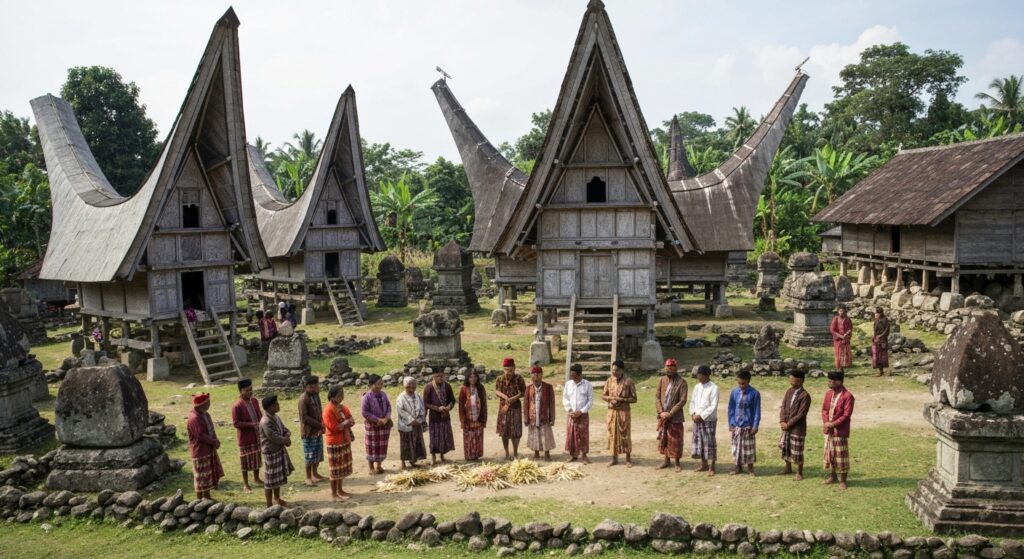
Understanding Sumba’s Living Cultural Heritage
Sumba Island possesses one of the most remarkable living cultural traditions in Southeast Asia. While modernisation has transformed much of Indonesia, Sumba’s geographic isolation and the resilience of its spiritual traditions have preserved a way of life that connects directly to the island’s ancient past. Visitors to Sumba do not merely observe cultural artefacts — they witness a living society where ancestral customs continue to shape daily life, social structure, and spiritual practice.
The foundation of Sumbanese culture is the Marapu belief system — an elaborate ancestral religion that governs everything from agricultural cycles and marriage negotiations to house construction and funeral rites. While Christianity has been adopted by many Sumbanese, the Marapu traditions persist alongside it, creating a unique cultural synthesis where church attendance on Sunday coexists with offerings to ancestral spirits throughout the week.
The Marapu Religion
Marapu is the indigenous spiritual system of Sumba Island. The term refers both to the collective ancestral spirits and to the belief system that governs communication with them. In the Marapu worldview, the living and the dead exist in a continuous relationship — the ancestors watch over their descendants, guide their decisions, and expect proper ritual acknowledgement in return.
Central to Marapu practice are the Rato — spiritual priests who serve as intermediaries between the human and spirit worlds. The Rato interpret signs, conduct rituals, and maintain the sacred knowledge that has been passed down through generations. Their role is particularly crucial during the Pasola Festival, where they determine the timing of the ceremony through the reading of Nyale sea worms.
Every traditional Sumbanese house (uma) serves as both dwelling and temple. The high peaked roof represents the connection between earth and sky, and the central post houses the family’s ancestral altar where offerings are made. The architecture is not decorative — every element has spiritual significance and is constructed according to precise ritual protocols.
Ikat Weaving
Sumba’s ikat textiles are among the finest in the world and represent one of Indonesia’s most sophisticated textile traditions. The tie-resist dyeing technique used to create Sumba’s distinctive patterns requires extraordinary skill, patience, and artistic vision.
The process begins with hand-spun cotton thread, which is bound with resist fibres in patterns that represent clan motifs, spiritual symbols, and narrative scenes. The bound threads are then dyed — traditionally using natural pigments including indigo (for blue) and morinda root (for red-brown). The binding and dyeing process may be repeated multiple times to achieve complex multi-colour patterns, with the entire production of a single textile taking anywhere from three months to two years.
Ikat textiles hold deep cultural significance beyond their aesthetic beauty. They are essential components of bride price negotiations, funeral offerings, and ceremonial dress. The motifs woven into each textile tell stories — of ancestral heroes, spiritual beings, animals, and the natural world. A skilled weaver is highly respected in Sumbanese society, and the finest textiles are considered sacred objects.
Megalithic Tomb Tradition
Sumba’s megalithic stone tombs are among the most visible expressions of the island’s cultural heritage. These massive carved stone structures serve as burial sites for clan leaders and continue to be created using methods essentially unchanged for thousands of years.
The construction of a megalithic tomb is one of the most significant social events in Sumbanese life. The stone must be quarried, carved, and transported — sometimes across kilometres of difficult terrain — using only human labour, wooden rollers, and ropes. Hundreds of people from across the community participate, and the process is accompanied by elaborate ceremonies, feasting, and animal sacrifices.
Ceremonies & Rituals
Funeral Ceremonies
Sumbanese funeral ceremonies are among the most elaborate in Indonesia. The death of a prominent clan member triggers a complex series of rituals that may extend over weeks or even months. The ceremony involves the sacrifice of water buffalo and other livestock, elaborate textile displays, traditional music and dance, and the eventual placement of the deceased in their stone tomb.
Wedding Ceremonies
Sumbanese weddings involve extensive negotiation between the families of the bride and groom. The bride price (belis) is a complex exchange of livestock (horses, water buffalo), ikat textiles, gold ornaments, and other valuables. These negotiations can last days and are governed by precise social protocols that reflect the status and relationships of both families.
The Pasola Festival
The Pasola is Sumba’s most famous ceremony — a mounted spear-throwing ritual held annually during February and March. Warriors on Sandalwood horses charge at each other in a sacred combat believed to bless the harvest and honour the ancestors. It is considered one of the most extraordinary cultural events remaining in the world.
Frequently Asked Questions
Can tourists visit traditional villages?
Yes, many traditional villages welcome respectful visitors, particularly when accompanied by a local guide who can make proper introductions. A donation or gift (betel nut, tobacco, or small cash contribution) is customary and appreciated.
Is it appropriate to photograph ceremonies?
This varies by ceremony and village. Your guide will advise on what is permitted. Generally, photography from a respectful distance is acceptable during public ceremonies like Pasola, but private rituals and some sacred areas may be off-limits.
What is Marapu religion?
Marapu is Sumba’s indigenous ancestral religion. It centres on the relationship between the living and their ancestors, with elaborate rituals, offerings, and ceremonies maintaining this connection. The Rato (priests) serve as intermediaries between the human and spirit worlds.
Where can I see ikat weaving?
Traditional villages in both West and East Sumba have active weavers. Praijing, Ratenggaro, and Prailiu (near Waingapu) are particularly good for observing the weaving process. Many weavers sell their work directly — prices range from IDR 100,000 for simple pieces to several million for museum-quality textiles.
Are Sumba’s megalithic tombs still being built?
Yes, Sumba is one of the few places in the world where megalithic monument construction continues as a living tradition. New tombs are still carved, transported, and erected using traditional methods, though the practice has become less frequent as costs and logistics increase.
Experience Sumba’s Living Culture
Our local guides provide authentic access to Sumba’s cultural heritage — village visits, weaving demonstrations, ceremony attendance, and deep cultural context that brings the traditions to life.
Plan Your Cultural Journey