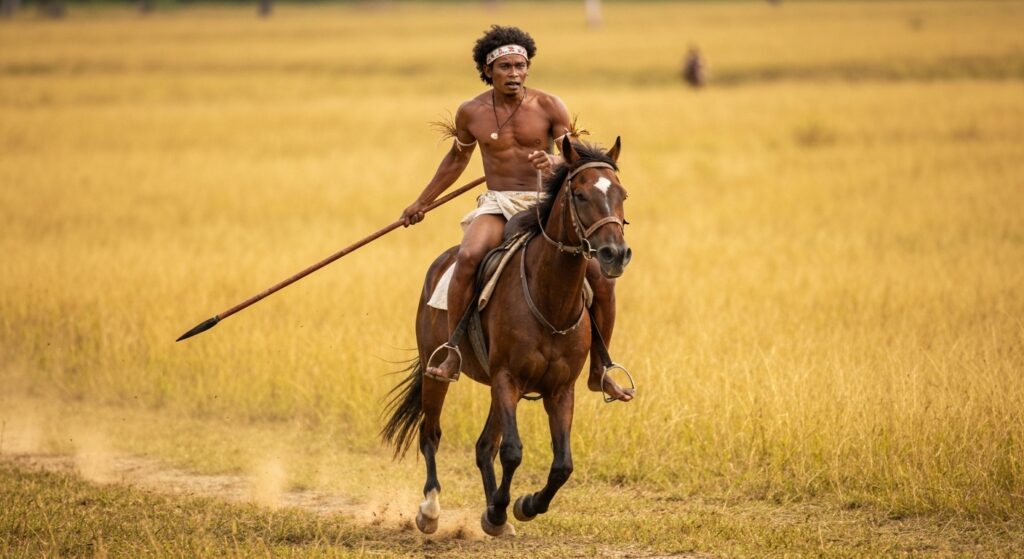
Pasola Rituals and Ceremonies
Pasola encompasses far more than the main combat event; it includes multiple ceremonial elements performed throughout the celebration period. These rituals begin weeks before the scheduled combat, with spiritual preparations, feasting, and community gatherings. Each ceremony carries specific meanings and traditions maintained over centuries, reflecting the sophisticated spiritual worldview of the Sumbanese people.
Pre-Pasola Preparations
The preparations for Pasola begin long before the actual combat. Families that will have warriors participating begin extensive planning, including the selection of horses, preparation of weapons, and organization of communal feasts. Spiritual leaders conduct divination ceremonies to determine auspicious timing and prepare the spiritual landscape for the upcoming ritual.
Warriors engage in intensive training sessions, learning traditional combat techniques passed down through family lines. They practice horsemanship on challenging terrain, developing the balance and control necessary for mounted spear combat. Simultaneously, ceremonial preparations occur, with altars being constructed and offerings prepared to honor ancestral spirits and deities believed to influence the ritual’s success.
The Opening Ceremonies
The opening ceremonies of Pasola are marked by elaborate ritual activities. Participants gather at sacred sites where spiritual leaders perform blessings and invocations. Traditional music plays as the community assembles, setting a ceremonial atmosphere that connects participants to centuries of ancestral practice. These opening rituals serve to sanctify the ground where combat will occur and invoke spiritual protection for all participants.
Traditional costumes are worn during opening ceremonies, with warriors donning elaborate headdresses, ornate textiles, and jewelry that signifies their family lineage and social status. The visual spectacle of these traditional costumes creates a striking contrast with the raw intensity of the upcoming combat, emphasizing the ritualistic nature of the event.
The Combat Phase
The actual combat portion of Pasola involves groups of mounted warriors charging at each other with wooden spears. The combat is divided into organized segments, with different warrior groups participating in turn. Despite its intense appearance, the combat is governed by traditional rules and expectations, with elders serving as referees to ensure the ritual maintains its sacred character.
Warriors aim to wound their opponents in controlled ways, with experienced combatants demonstrating skill in landing precise strikes while minimizing fatal injuries. The combat continues until a certain number of injuries have been sustained or a predetermined time period has elapsed. The ritual concludes when the participating groups have demonstrated their prowess and made sufficient symbolic offerings of blood to satisfy spiritual requirements.
Post-Combat Celebrations and Feasting
Following the combat phase, elaborate communal feasts celebrate the successful completion of Pasola. These feasts can involve hundreds of people and feature traditional Sumbanese cuisine, particularly dishes prepared with meat from ritually slaughtered animals. The festive atmosphere following the intense combat creates a marked contrast, transforming the mood from spiritual intensity to communal joy and thanksgiving.
During these celebrations, stories of the combat are recounted, warriors are honored, and the community reflects on the spiritual significance of what has been accomplished. Young people participate in traditional dances and music, connecting the modern celebration to ancestral traditions. These feasts often last long into the night, with participants sharing food, stories, and laughter.
Spiritual Beliefs and Cosmology
Pasola is deeply rooted in Sumbanese spiritual beliefs, which blend indigenous ancestor veneration with some elements of Hindu and Islamic influence. The Sumbanese worldview emphasizes the interconnectedness of the living community, ancestral spirits, and the natural environment. Through Pasola, these different spiritual realms are brought into communion through ritual action and ceremonial combat.
The tradition reflects beliefs about the necessity of blood sacrifice to maintain harmony between the spiritual and material worlds. Participants view the blood spilled during combat not as violence but as an essential spiritual offering that ensures continued blessings from ancestors and the land itself. This cosmological framework gives Pasola its profound meaning within Sumbanese culture.
Regional Variations Across Sumba
While Pasola is most strongly associated with East Sumba, variations of the tradition exist in different regions of the island. West Sumba has its own versions of mounted spear combat rituals, though they may differ in specific details and timing. Each regional variation reflects the unique history and spiritual traditions of different Sumbanese communities, maintaining core elements while expressing local cultural distinctiveness.
Understanding these regional variations provides deeper insight into the diversity within Sumbanese culture. Visitors interested in experiencing Pasola should learn about regional differences to appreciate the full cultural complexity of the tradition across the entire island.
Women’s Roles in Pasola Tradition
While Pasola combat itself is exclusively male, women play essential and honored roles throughout the tradition. Women prepare ceremonial foods, create traditional textiles worn during ceremonies, and perform important ritual functions. Female elders serve as spiritual guides and custodians of knowledge about ceremonial procedures and their significance. In some communities, women lead certain preliminary rituals, demonstrating that Pasola is fundamentally a community practice where gender roles are complementary rather than hierarchical.
FAQ – Pasola Traditions and Practices
Are women allowed to participate in Pasola combat?
Traditionally, Pasola combat is exclusively male, reflecting historical gender roles in Sumbanese warrior culture. However, women play crucial roles in preparations, ceremonies, and celebrations, and modern discussions explore potential evolution of these traditions while respecting cultural authenticity.
How are injuries treated during Pasola?
Traditional healers and modern medical practitioners are present at Pasola events to treat injuries. While serious injuries do occur, the ritual’s sacred nature means that injuries are accepted as meaningful sacrifices rather than tragic accidents, though efforts are made to prevent fatalities.
What role do elders play in Pasola?
Elders serve as spiritual guides, teachers, referees, and keepers of tradition. They determine ceremonial details, guide warrior preparation, oversee the combat to ensure adherence to traditional rules, and interpret the ritual’s spiritual significance for younger generations. Learn more about Sumbanese culture at our culture page.
Can I participate in Pasola if I visit?
Direct participation in Pasola combat is reserved for Sumbanese community members. However, visitors can observe from designated areas and, with proper guidance, participate in ceremonial aspects like feasting and celebrations. Reach out via WhatsApp to discuss possibilities.
How long does a complete Pasola cycle last?
From initial spiritual preparations to final celebrations, Pasola typically spans 7-14 days depending on regional traditions and community decisions. The main combat events usually occupy 2-3 days within this broader ceremonial period, with extensive ritual activities before and after the actual spear combat.
Preservation and Future of Pasola
The future of Pasola faces both opportunities and challenges. Tourism brings resources that support preservation efforts and provide incentives for youth participation. However, modernization and migration pressures pose risks to traditional practice. Cultural organizations work actively to document Pasola, train younger generations in tradition, and find sustainable ways to maintain the practice while adapting to contemporary realities.
Explore More
Pasola War Game: Ancient Combat Rituals
Pasola Lamboya: Tradition and CulturePasola Lamboya: Tradition and Culture
Pasola Festival 2026: Complete Guide and ExperiencePasola Festival 2026: Complete Guide and Experience
Pasola Festival Schedule 2026: Dates and TimingsPasola Festival Schedule 2026: Dates and Timings