Sumba’s Unique Biodiversity
Sumba possesses remarkable biodiversity despite being a relatively small island in the Indonesian archipelago. The island’s ecological uniqueness stems from its geographical isolation and distinctive climatic patterns, which have created habitats for species found nowhere else on Earth. Sumbanese ecosystems range from dry savanna-like landscapes to humid coastal zones, each supporting specialized communities of plants and animals adapted to these specific environmental conditions.
The island is recognized as an important area for biodiversity conservation within Indonesia. Endemic species—organisms found only in Sumba—represent a significant portion of the island’s fauna and flora. The loss of these species would represent an irreplaceable loss of evolutionary history and genetic diversity. Conservation efforts on Sumba face challenges from habitat loss, hunting, and climate pressures, making the protection of remaining wilderness areas increasingly critical.
Forest Ecosystems and Vegetation
Sumba’s forests represent unique tropical ecosystems adapted to the island’s distinctive monsoon climate. Dry deciduous forests in some regions contrast with more humid tropical forests in other areas, creating remarkable ecological diversity across relatively short distances. These forests provide habitat for numerous species and serve as crucial carbon sinks in Indonesia’s broader climate regulation system. The forests also hold ethnobotanical importance, with Sumbanese communities having developed extensive knowledge of medicinal plants and forest products.
The vegetation patterns on Sumba reflect long-term interactions between climate, soil conditions, and human land management practices. Coastal mangrove forests provide important nursery habitat for marine life and protection against coastal erosion. Highland forests offer refuge for endemic species and serve cultural functions as sacred forests where certain ceremonies are performed. Understanding these ecological relationships helps explain why Pasola is timed to agricultural seasons and why water and land management remain central to Sumbanese survival and spiritual practices.
Marine and Coastal Environments
Sumba’s coastlines are characterized by diverse marine ecosystems including coral reefs, seagrass beds, and rocky intertidal zones. These marine environments support fisheries that provide food security for coastal communities and represent important tourism attractions. Coral reefs in particular are biologically diverse ecosystems supporting hundreds of species of fish, mollusks, and crustaceans. The health of these reefs depends on water quality, temperature stability, and protection from destructive fishing practices.
Coastal communities maintain traditional fishing practices refined over generations to balance resource extraction with ecosystem sustainability. However, modern pressures including overfishing, pollution, and climate-driven changes to ocean temperature and chemistry pose significant threats to marine biodiversity. Conservation initiatives increasingly focus on establishing marine protected areas and supporting sustainable fishing practices that maintain both community livelihoods and ecosystem health.
Fauna: Unique Animals of Sumba
Sumba hosts several animal species found nowhere else in the world. The Sumba boar, an endemic species, represents an important element of local fauna and cultural practices. Birds endemic to Sumba include the Sumba green pigeon and various other species adapted to the island’s unique habitats. Reptiles, including endemic species of snakes and lizards, have evolved distinctive characteristics suited to Sumba’s environmental conditions. The island’s mammalian fauna also includes bats, civets, and rodents, many in multiple endemic species.
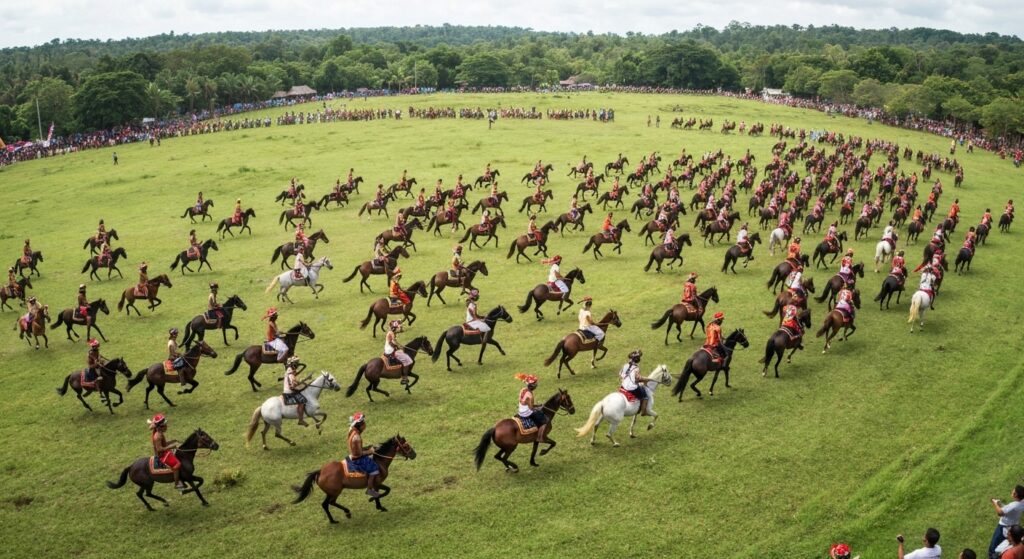
The Sumbanese horse, while not unique to Sumba, has been selectively bred for generations and represents an important genetic and cultural resource. These ponies are smaller than horses found in other regions but are known for their strength, agility, and sure-footedness on challenging terrain. Their cultural significance in Pasola ceremonies and agricultural work makes their preservation crucial for both cultural and economic reasons. Modern conservation efforts increasingly recognize the importance of preserving traditional livestock breeds alongside wild species.
Water Resources and Hydrology
Water availability is a critical factor shaping life on Sumba. The island’s topography and geology determine water flow patterns, with some areas having year-round water sources while others experience significant dry season water scarcity. Rivers and streams provide essential water for agricultural irrigation, household use, and ceremonial purposes. The complex relationship between seasonal rainfall, groundwater availability, and human water use creates ongoing management challenges, particularly during extended dry seasons.
Traditional water management systems developed by Sumbanese communities reflect sophisticated understanding of the island’s hydrology. These systems include stone-lined channels, terracing designed to capture rainfall, and communal water storage facilities. In recent years, modern water infrastructure has been introduced, though it often complements rather than replaces traditional systems. Understanding water availability is essential for planning tourism activities and understanding why agricultural ceremonies like Pasola occur at specific seasons.
Climate Change and Environmental Challenges
Sumba, like much of the island-based developing world, faces significant challenges from climate change. Rising temperatures, changing rainfall patterns, and sea level rise threaten agricultural productivity, marine ecosystems, and coastal communities. The island’s reliance on rainfall-dependent agriculture makes it particularly vulnerable to drought and erratic precipitation. Coral bleaching events in marine areas have become more frequent, threatening both fish populations and the tourism industry.
Communities on Sumba are developing adaptation strategies including crop diversification, water conservation practices, and marine resource management initiatives. International support for climate adaptation helps implement sustainable practices while preserving traditional knowledge. Tourism can play a positive role by providing economic incentives for conservation and environmental protection. By choosing sustainable tourism practices, visitors directly support these conservation efforts.
FAQ – Sumba’s Environment and Conservation
Can I see endemic wildlife on Sumba tours?
Yes, nature-focused tours can provide opportunities to observe endemic bird species, unique reptiles, and other wildlife. However, wildlife viewing is weather-dependent and requires patience. Our guides have extensive knowledge of animal behavior and habitat locations, maximizing your chances of meaningful wildlife encounters.
Are there national parks or protected areas on Sumba?
Sumba has several protected areas designated for conservation purposes. These areas restrict certain activities but provide excellent opportunities for nature observation and environmental education. Ask us about access to these special places during your visit.
How can tourism help environmental conservation on Sumba?
Tourism revenue supports conservation initiatives and provides incentives for protecting endangered habitats. By choosing eco-conscious tour operators and respecting environmental guidelines, visitors directly contribute to preservation efforts. Sustainable tourism practices ensure that current environmental enjoyment doesn’t compromise future generations’ opportunities to experience Sumba’s natural wonders.
What environmental issues should visitors know about?
Understanding Sumba’s environmental challenges helps visitors make responsible choices. Plastic pollution, coral reef degradation, and deforestation are ongoing concerns. Supporting local conservation organizations, using reef-safe sunscreen, and minimizing waste during your visit help address these challenges.
Connecting Culture and Environment
Sumbanese culture is intrinsically connected to the island’s environment. Traditional practices reflect deep understanding of seasonal patterns, water availability, and ecosystem dynamics. Ceremonies like Pasola are timed to agricultural cycles determined by rainfall and land conditions. By understanding these connections, visitors gain deeper appreciation for how indigenous knowledge systems create sustainable relationships with natural environments. This holistic perspective offers valuable lessons for contemporary conservation challenges facing the entire world.
Explore More
Pasola Gallery: Visual Journey Through the Festival
Pasola Festival 5D/4N Tour PackagePasola Festival 5D/4N Tour Package
Pasola Festival 4D/3N Tour PackagePasola Festival 4D/3N Tour Package
Pasola Festival 3D/2N Tour PackagePasola Festival 3D/2N Tour Package