Geography and Climate of Sumba
Sumba is an island located in East Nusa Tenggara, Indonesia, positioned southeast of Bali and east of Java. The island covers approximately 11,000 square kilometers and features diverse geographical characteristics ranging from coastal plains to rolling hills and elevated plateaus. The landscape is shaped by a combination of tropical monsoon climate, volcanic history, and unique weathering patterns that have created distinctive geographical features found nowhere else in the world.
The climate of Sumba is characterized by a pronounced dry season (May-October) and a wet season (November-April). Annual rainfall varies significantly across different regions, with coastal areas receiving less precipitation than interior highland regions. This climate pattern has historically influenced the agricultural practices of the Sumbanese people, making seasonal timing crucial for cultural ceremonies like Pasola.
Indigenous Sumbanese Culture
The Sumbanese people have inhabited Sumba for thousands of years, developing a unique culture that reflects their island environment and spiritual beliefs. Sumbanese culture is characterized by strong community bonds, respect for ancestral traditions, and sophisticated knowledge of sustainable land management. The indigenous population has maintained remarkable cultural continuity despite external influences, with traditional practices, languages, and belief systems remaining central to community identity.
Sumbanese society is traditionally organized into clans and kingdoms, with leadership structures based on hereditary lines and demonstrated wisdom. These social structures continue to influence how communities organize major ceremonies like Pasola, with clan leaders and royal families playing central roles in planning and execution. The hierarchical nature of Sumbanese society is reflected in everything from naming conventions to ceremonial leadership roles.
Traditional Architecture and Housing
Traditional Sumbanese houses reflect the island’s climate and cultural values. The traditional houses, known as “uma,” are distinctive structures built on stilts, featuring steep thatched roofs designed to shed the heavy monsoon rains. These houses are constructed without nails, using traditional joinery techniques and natural materials that have been refined over centuries. The design provides natural ventilation and protection from both weather extremes and wildlife.
The arrangement of houses within villages reflects community structure and social hierarchy. Larger houses belonging to clan leaders or wealthy families occupy central or elevated positions, while commoner houses surround them. Public gathering spaces and ritual areas are strategically positioned to facilitate community meetings and ceremonial activities. This spatial organization reflects deeply held cultural values about community, hierarchy, and spiritual geography.
Sumbanese Languages and Communication
The Sumbanese people speak several closely related languages belonging to the Malayo-Polynesian language family. The primary languages are West Sumbanese, East Sumbanese, and Central Sumbanese, each with numerous dialects reflecting local variations. While Indonesian has become widespread due to national education policies, traditional languages remain active in daily community life, religious ceremonies, and cultural transmission.
Language carries significant cultural meaning in Sumbanese society, with different registers used for different social contexts and relationships. Respectful language toward elders, formal speech for ceremonial occasions, and intimate communication with family members all employ distinct linguistic patterns. Preserving these languages is considered crucial for maintaining cultural identity and spiritual knowledge embedded in traditional vocabulary and expressions.
Textile Traditions and Weaving
Sumbanese textile arts represent some of Indonesia’s most distinctive traditional crafts. The island is famous for its handwoven ikat textiles, featuring intricate geometric patterns created through traditional tie-dye techniques. These textiles hold deep cultural significance, with specific patterns denoting family lineage, social status, and ceremonial purpose. Each pattern tells a story connected to Sumbanese history, spirituality, and ancestral knowledge.
Weaving is traditionally a female-dominated craft, with knowledge transmitted from mothers to daughters across generations. The process is labor-intensive, requiring months to complete a single high-quality textile. Beyond their decorative function, these textiles serve practical purposes in ceremonies, with specific patterns worn during important rituals like Pasola. The economic value of these textiles has made weaving an important income source for many Sumbanese families.
Agricultural Practices and Land Management
Sumbanese agriculture reflects centuries of adaptation to the island’s climate and geography. The primary crops include rice, corn, and various root vegetables, grown in rotation with fallow periods to maintain soil fertility. Sumbanese farmers have developed sophisticated water management systems and terracing techniques that maximize agricultural productivity while maintaining environmental sustainability. These practices demonstrate deep ecological knowledge developed through generations of observation and experimentation.
Livestock, particularly horses, cattle, and chickens, play important roles in both subsistence and ceremonial contexts. Animals are wealth indicators and are used extensively in ceremonies, particularly as ritual sacrifices during important events. The integration of livestock and crop agriculture creates a balanced farming system that supports both human nutrition and cultural practices. Visit our main page to learn more about visiting agricultural communities during harvest season.
FAQ – Sumbanese Culture and Geography
What is the best time to visit Sumba?
The dry season (May-October) offers the most comfortable visiting conditions with clear skies and minimal rainfall. However, Pasola occurs during the rainy season (February-March), so timing depends on whether you want to experience the main cultural event or prefer easier traveling conditions. Contact us to plan your visit timing.
What language do Sumbanese people speak?
Sumbanese people speak regional languages and Indonesian. English is spoken in tourist areas, but learning a few Indonesian phrases is appreciated and helpful for deeper cultural interaction.
Are there health facilities on Sumba?
Basic health facilities exist in larger towns, but serious medical emergencies typically require travel to Bali. Travel insurance covering medical evacuation is recommended. Our tour packages include arrangements for health and safety during your stay.
How can I support Sumbanese communities through tourism?
Choose tours that employ local guides, stay at locally-owned accommodations, purchase handicrafts directly from artisans, and participate respectfully in cultural activities. Ethical tourism practices ensure that your visit benefits the communities you’re experiencing. Chat with us about responsible tourism options.
Sumba in the Modern World
Sumba faces contemporary challenges including economic development pressures, migration to urban areas, and educational opportunities that draw young people away from traditional practices. However, cultural pride and the economic benefits of heritage tourism have created strong incentives for preservation. Modern infrastructure improvements, while bringing conveniences, also introduce social changes that require community adaptation and thoughtful cultural navigation.
Explore More
Pasola Festival Schedule 2026: Dates and Timings
Pasola Festival: The Complete Guide to Sumba’s Sacred TraditionPasola Festival: The Complete Guide to Sumba’s Sacred Tradition
Pasola Luxury Tour: VIP Festival ExperiencePasola Luxury Tour: VIP Festival Experience
Pasola Itinerary: 3-Day Perfect Festival ExperiencePasola Itinerary: 3-Day Perfect Festival Experience
📸 Photography at Pasola 2026
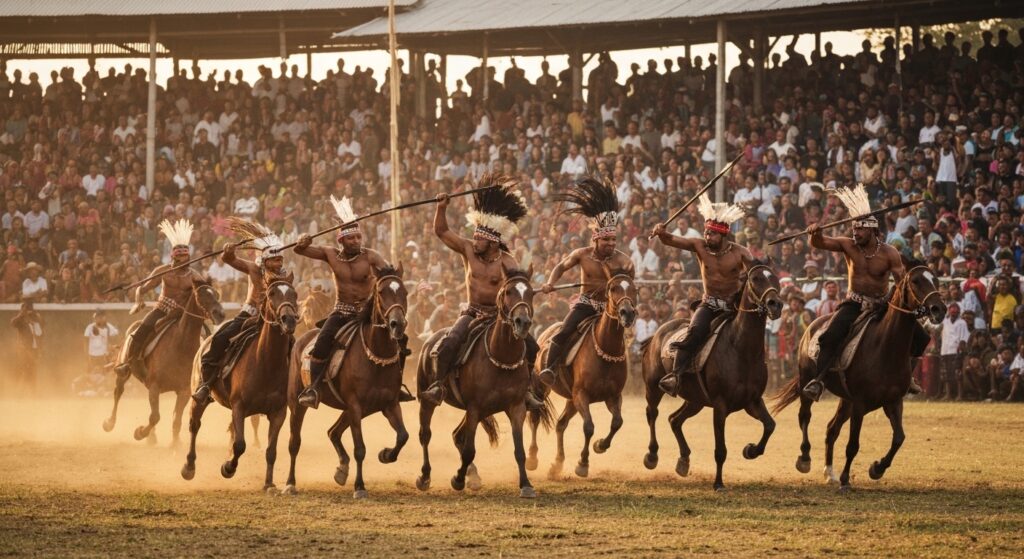
The Pasola Festival is one of the most photographically dramatic events in all of Asia. Hundreds of warriors in traditional dress, mounted on decorated horses, charging across a field with bamboo spears — the visual intensity is extraordinary. Our guides know the optimal camera positions for every ceremony location, and for dedicated photographers we offer specialist photography guides.
Equipment recommendations: DSLR or mirrorless with a telephoto lens (200mm+) for ceremony action, wide angle for crowd and atmosphere shots. Arrive before sunrise at ceremony grounds to get the best golden-hour preparation images of warriors dressing and horses being decorated.
⚠️ Important: Book Early for Pasola 2026
Premium accommodation (Nihi Sumba, Cap Karoso) books out completely for Pasola season every year. We strongly recommend securing your tour and accommodation by November 2025 at the latest. Festival packages sell out annually — do not leave booking to January or February.
🎯 How to Prepare for Pasola 2026
- Book flights to Tambolaka Airport — West Sumba — ideally from Bali or Jakarta. Check Garuda Indonesia, Lion Air, and Wings Air.
- Secure accommodation early — Nihi Sumba, Cap Karoso, and Lelewatu Resort all fill up for Pasola season. We can assist with bookings.
- Contact us for your Pasola tour package — packages include guide, vehicle, ceremony access, and Nyale ritual inclusion. See all Pasola packages →
- Pack appropriately — modest, breathable clothing, sun protection, good walking shoes. Ceremonies can last 4–6 hours.
- Learn the basics — understanding the spiritual purpose of Pasola makes the experience dramatically richer. We provide pre-ceremony briefings.