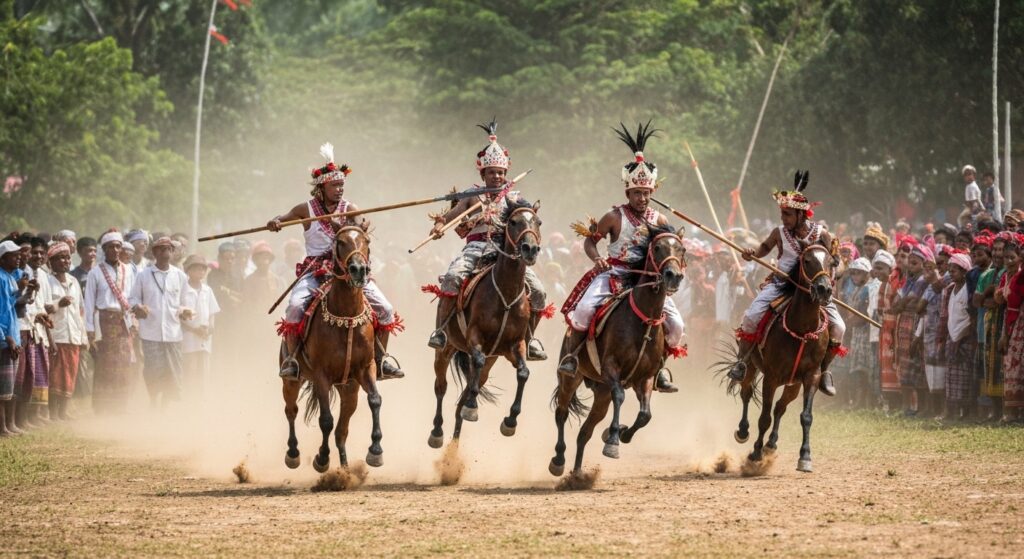
Understanding the Pasola Festival
The Pasola is widely regarded as one of the most spectacular and authentic cultural ceremonies remaining in Southeast Asia. Unlike festivals designed for tourists, the Pasola is a living ritual that has been performed on Sumba Island for over two thousand years. Each year, during the full moon season of February and March, hundreds of horsemen from rival clans gather on designated fields across West and Southwest Sumba to enact this extraordinary mounted combat ceremony.
The word “Pasola” derives from “hola” or “sola,” meaning a type of wooden javelin used in the ceremony. Warriors ride bareback or with minimal saddles on the famed Sandalwood horses — a small but remarkably agile breed native to the island. The spears, once sharpened bamboo that frequently caused serious injuries and even death, are now blunted at the tips, though the ceremony remains intensely physical and dangerous by modern standards.
What makes the Pasola extraordinary is its spiritual significance. The Sumbanese people who follow the Marapu ancestral religion believe that the spilling of blood during Pasola fertilises the earth and ensures a bountiful harvest. The ceremony is never performed for entertainment — it is a solemn obligation to the ancestors and the spiritual forces that govern life on the island. Visitors are welcome, but they attend as witnesses to a sacred act, not as spectators at a show.
When Does Pasola Take Place?
The Pasola ceremony follows a complex traditional calendar tied to the appearance of the Nyale sea worms. Each year between February and March, the Rato (Marapu spiritual priests) observe the ocean along Sumba’s southern coast for the annual spawning of the Nyale worms — colourful marine polychaetes that emerge from the coral reefs under specific lunar conditions. The Rato interpret the colour, quantity, and timing of the Nyale as divine messages about the coming agricultural season.
Once the Nyale have been gathered and read, the Rato declare the Pasola open. The ceremony typically follows this annual sequence across four traditional districts:
Lamboya
Usually the first district to hold Pasola, typically in mid-February. The ceremony takes place near Waikabubak, the capital of West Sumba, making it the most accessible location for visitors.
Kodi
Held in the westernmost tip of Sumba, Kodi’s Pasola is considered the most traditional and intense. The Kodi people are renowned for their fierce riding skills and spiritual devotion.
Wanukaka
Located south of Waikabubak, Wanukaka offers a slightly smaller but equally authentic Pasola experience, often with fewer tourists and a more intimate atmosphere.
Gaura
The most remote Pasola location in Southwest Sumba. Gaura’s ceremony attracts very few outsiders, offering an unfiltered look at the tradition in its purest form.
The Ceremony: What Actually Happens
The Pasola unfolds over several days, beginning well before the horsemen take the field. Understanding the full sequence helps visitors appreciate the depth of what they are witnessing.
In the days preceding the mounted combat, the Rato conduct a series of rituals at sacred sites. Offerings of betel nut, livestock, and woven textiles are presented to the Marapu spirits. The Rato enter trance states to communicate with the ancestors, seeking permission and blessing for the ceremony. These preliminary rituals are deeply private and visitors are generally not permitted to attend — though your guide can explain what is occurring.
The Nyale ceremony takes place at dawn on the beach. Hundreds of Sumbanese people wade into the shallows to collect the sea worms as they emerge from the reef. The Rato examine the Nyale harvest — abundant, colourful worms signal a good year; sparse or dark worms warn of hardship ahead. This moment determines both the agricultural outlook and whether the Pasola will proceed.
The mounted combat itself typically begins mid-morning and continues through the afternoon. Two teams of horsemen, representing rival clans, face each other across an open field. At the signal, riders charge forward at full gallop, hurling their wooden spears at opposing horsemen while simultaneously dodging incoming projectiles. The skill required is extraordinary — riders must control their horse at speed with their legs alone while throwing and dodging spears with lethal accuracy.
Blood drawn during the combat is considered sacred. The Sumbanese believe that the spilling of blood nourishes the earth and pleases the Marapu spirits. A ceremony in which blood is drawn is considered auspicious; one without blood is a cause for concern about the coming harvest. This belief explains why the combat, while regulated, remains genuinely dangerous.
The Sacred Horses of Pasola
The Sandalwood horse is central to both the Pasola ceremony and Sumbanese identity. These compact, hardy horses — standing around 12 to 13 hands — have been bred on Sumba for centuries. Named after the sandalwood trees that once covered the island, they are remarkably sure-footed, agile, and responsive to their riders.
In traditional Sumbanese society, horses represent wealth, status, and spiritual power. A man’s standing in his clan is often measured by the quality and number of his horses. Before Pasola, the finest horses are decorated with woven ikat textiles, bells, and ornamental fittings. The bond between rider and horse is considered sacred — a warrior who is thrown from his mount during Pasola suffers not just physical humiliation but spiritual disgrace.
Visitors to Sumba can experience Sandalwood horse riding throughout the year, not just during Pasola season. Several luxury resorts, including the world-renowned Nihi Sumba, offer guided rides along Sumba’s dramatic coastline and through its rolling savanna landscapes. These experiences provide a gentler but equally memorable encounter with the island’s equestrian heritage.
How to Attend Pasola as a Visitor
Attending Pasola requires planning and cultural sensitivity. The ceremony takes place in remote locations with limited infrastructure, and visitor behaviour directly affects whether future tourists will be welcome. Here is what you need to know to attend respectfully and safely.
The most important consideration is working with a knowledgeable local guide. The Pasola fields are not signposted tourist attractions — they are traditional ceremonial grounds that shift location based on the Rato’s guidance. A local guide ensures you reach the correct location, understand the protocols, and avoid inadvertently causing offence. At Sumba Pasola, all our Pasola tour packages include experienced Sumbanese guides who have personal connections to the participating clans.
Dress modestly and respectfully. Avoid bright colours that might distract the horsemen, and wear comfortable clothing suitable for standing in the sun for several hours. Bring sun protection, water, and sturdy footwear — the fields can be dusty or muddy depending on recent weather. Photography is generally permitted from designated viewing areas, but always ask your guide before using drones or approaching the ceremonial zone.
Accommodation during Pasola season should be booked well in advance. The towns of Waikabubak and Waitabula offer a range of options, from simple guesthouses to more comfortable hotels. For a luxury experience, properties such as Nihi Sumba and Cap Karoso are within driving distance of the major Pasola sites, though availability during the festival period is extremely limited.
Beyond Pasola: Exploring Sumba Island
While the Pasola is Sumba’s most famous cultural event, the island offers extraordinary experiences year-round. From pristine beaches and dramatic waterfalls to ancient megalithic villages and world-class surfing, Sumba rewards visitors who take the time to explore beyond the festival.
West Sumba is the cultural heartland, home to traditional villages such as Ratenggaro and Praijing where ancestral customs continue largely unchanged. The iconic high-peaked houses, megalithic stone tombs, and intricate ikat weaving traditions make this region a living museum of Indonesian heritage. East Sumba offers a different character — vast savannas, the stunning Tanggedu Waterfall (often called Sumba’s Grand Canyon), and the ethereal beauty of Weekuri Lake.
For travellers seeking luxury, Sumba has emerged as one of Indonesia’s most exclusive destinations. Nihi Sumba, consistently ranked among the world’s best hotels, offers a transformative experience combining world-class accommodation with deep cultural immersion. Cap Karoso and Lelewatu Resort provide additional luxury options, each with their own distinctive approach to showcasing Sumba’s natural and cultural beauty.
Frequently Asked Questions About Pasola
When is the next Pasola Festival?
The Pasola Festival typically takes place during February and March each year. The exact dates are determined by the Rato priests based on the Nyale sea worm appearance and cannot be predicted with certainty more than a few weeks in advance. For 2026, the ceremony is expected to begin in mid-February in Lamboya and continue through early March across all four districts.
Is Pasola dangerous for spectators?
While the mounted combat is genuinely dangerous for participants, spectators watching from designated areas are safe. Occasionally, a stray spear may land near the crowd, but injuries to visitors are extremely rare. Following your guide’s instructions about where to stand is the key to staying safe.
Can foreigners participate in Pasola?
No, the mounted combat is exclusively for Sumbanese men from the participating clans. Visitors attend as respectful observers. However, you can participate in related cultural activities such as the Nyale beach ceremony and traditional feasts.
How do I get to Sumba for Pasola?
Most visitors fly to Sumba via Bali. Wings Air and Nam Air operate daily flights from Ngurah Rai International Airport (DPS) to Tambolaka Airport (TMC) in West Sumba. The flight takes approximately 90 minutes. From Tambolaka, it is a 1-2 hour drive to the main Pasola locations.
What should I bring to Pasola?
Essential items include sun protection (hat, sunscreen, sunglasses), water bottles, comfortable walking shoes, a camera with a good zoom lens, and modest clothing in neutral colours. Cash is essential as there are no ATMs near the Pasola fields. Your guide will advise on any specific items based on the location and conditions.
How long should I stay in Sumba for Pasola?
We recommend a minimum of 3-4 nights to experience the Pasola comfortably, including travel time and at least one additional day for cultural exploration. A 5-7 night itinerary allows you to attend Pasola in multiple locations and explore Sumba’s other attractions at a relaxed pace.
Experience the Pasola Festival
Join us for an unforgettable journey into one of the world’s last living warrior traditions. Our expert guides ensure you witness the authentic Pasola ceremony with cultural sensitivity and comfort.
Book Your Pasola TourExplore More
Pasola Festival Locations: The Four Sacred Valleys
Pasola Festival 2026: Complete Guide and ExperiencePasola Festival 2026: Complete Guide and Experience
Pasola Gallery: Visual Journey Through the FestivalPasola Gallery: Visual Journey Through the Festival
Pasola Accommodation: Where to Stay During the FestivalPasola Accommodation: Where to Stay During the Festival